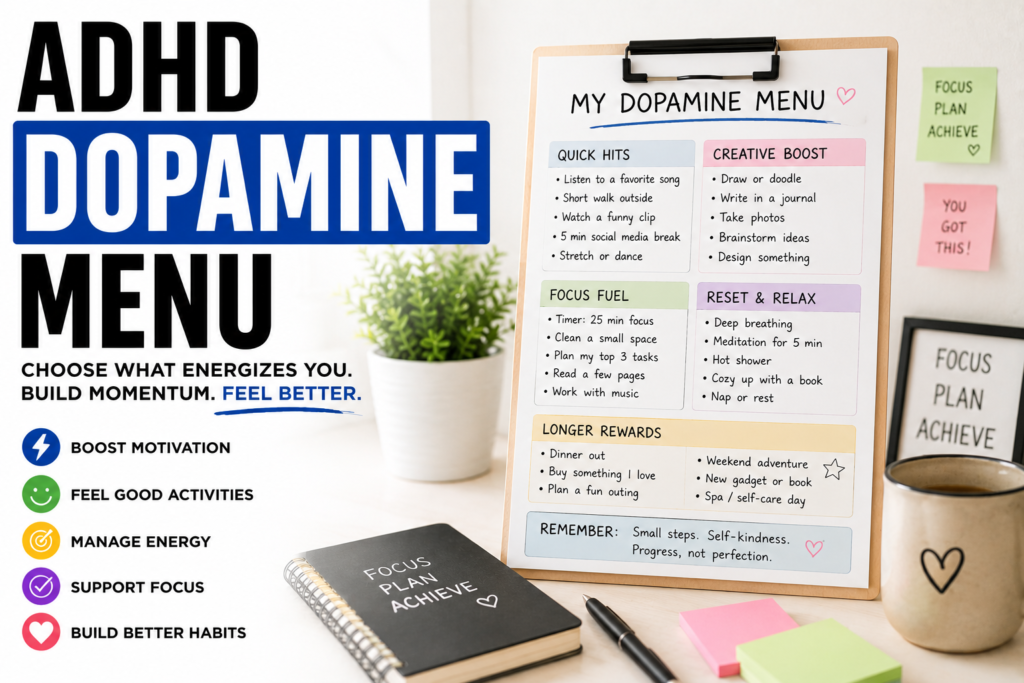
ADHD Dopamine Menu: Waking Up Neurodivergent Motivation
You sit in front of your computer screen. You have a task that needs to be completed, and you have the physical capability to do it. Yet, you cannot bring yourself to type a single letter or click a button. You feel a heavy weight in your chest, a fog in your mind, and a restlessness in your body. Your brain is actively screaming for something—anything—that feels interesting, novel, or urgent. To satisfy this craving, you open a browser tab and look at a social media feed. Two hours disappear. You feel guilty, behind schedule, and physically exhausted. You blame yourself for lacking self-discipline, but what your brain was actually seeking was a chemical fuel: **dopamine**.
For individuals with Attention Deficit Hyperactivity Disorder (ADHD), the brain operates with a chronic baseline deficit in dopamine. This neurochemical shortage makes routine, under-stimulating tasks feel physically painful to initiate. When faced with low-dopamine tasks, the ADHD brain defaults to impulsive “dopamine seeking”—which often manifests as doom-scrolling, binge-eating sugar, or online shopping. To break this cycle, neurodivergent specialists recommend building a **dopamine menu** (sometimes called a “dopa-menu”). A dopamine menu is a pre-planned, visual directory of stimulating activities categorized like a restaurant menu, designed to help you refuel your brain’s chemical levels in a healthy, structured way.
This article provides an expert analysis of the dopamine menu concept. We will explore the neuroscience of dopamine deficits in ADHD, analyze how it functions as one of the most effective adhd motivation tools, outline a step-by-step framework to build your own dopamine menu adhd, and show how to integrate it into a balanced adhd reward system.
The Science of ADHD and Dopamine: The Chemical Engine
To use a dopamine menu effectively, you must understand the role of dopamine in the human brain. Dopamine is a neurotransmitter—a chemical messenger that transmits signals between nerve cells. It is commonly misunderstood as the “pleasure chemical,” but neurologically, dopamine is the chemical of **anticipation, motivation, and goal-directed action**.
Key Concept: Dopamine does not spike when you experience a reward; it spikes when you *anticipate* a reward. This chemical spike is what generates the physical motivation to start a task. If the brain cannot anticipate a reward, it will not initiate action.
In the neurotypical brain, baseline dopamine levels are stable. When a neurotypical individual anticipates the completion of a routine task (e.g., filing taxes, cleaning the kitchen), their brain releases a steady stream of dopamine, providing the motivation to begin and complete the chore. In the ADHD brain, this system is altered in two major ways:
1. Dopamine Transporter Density and Atypical Receptors
Research indicates that individuals with ADHD have a higher density of dopamine transporters—the cellular “vacuum cleaners” that clear dopamine from the synaptic cleft before it can bind to receptors. This means that even when dopamine is released, it is cleared too quickly, leaving the brain in a state of chronic chemical under-arousal. Furthermore, ADHD brains exhibit fewer dopamine D2/D3 receptors in the prefrontal-striatal pathways, which manage focus and self-regulation.
2. The Dopamine-Seeking Reflex
Because the ADHD brain is constantly under-stimulated, it is always on the hunt for a chemical spike to raise its arousal levels to a functional state. When you are forced to sit through a boring lecture or work on a complex spreadsheet, your brain experiences this lack of stimulation as a survival emergency. It triggers an impulsive search for novelty, movement, or urgency. If you do not have a pre-planned list of healthy dopamine sources, your brain will default to the fastest, lowest-effort options: social media notifications, video game loops, or sugary snacks. A dopamine menu acts as a structured redirection system for this reflex.
Symptoms of Dopamine Depletion in ADHD
When your baseline dopamine levels drop below a functional threshold, your executive functions shut down, leading to a set of distinct behavioral and cognitive symptoms.
| Behavioral Symptom | The Neurochemical State | Real-World Manifestation |
|---|---|---|
| Task Initiation Freeze | Prefrontal cortex lacks the dopaminergic signal required to bridge the gap between intention and action. | Staring at a document for three hours, knowing you need to type, but remaining physically motionless. |
| Impulsive Doom-Scrolling | The brain seeks rapid, low-effort dopamine hits from novel visual stimuli. | Unlocking your phone to check a calendar and getting sucked into video feeds for 90 minutes. |
| The Afternoon Crash | Melatonin and body temperature shifts combine with a late-day dopamine depletion. | Feeling completely exhausted at 3:00 PM, unable to focus, and consuming sugar or caffeine. |
| Under-Stimulated Irritability | Low dopamine causes the amygdala to register boredom as an uncomfortable threat. | Feeling angry, restless, or volatile when forced to sit still or wait in a queue. |
| Sidequest Procrastination | The brain avoids the target task to perform chores that offer immediate visual rewards. | Sweeping the garage or organizing old emails while a critical tax file remains unsubmitted. |
Real-Life Examples of Dopamine-Seeking Behaviors
Let’s look at three realistic profiles that show the difference between impulsive dopamine-seeking and using a structured dopamine menu.
Scenario A: The Sugar and Caffeine Cycle
Rachel is a writer who works from home. At 2:00 PM, she has to edit a long, dry manuscript. She sits at her desk, but her brain is under-stimulated. Feeling a wave of fatigue, she walks to the kitchen and eats a sugary chocolate bar and drinks an energy drink. The sugar and caffeine spike her dopamine, and she edits for 45 minutes. However, by 3:30 PM, she experiences a sugar crash. She is now more tired than before, has a headache, and spends the rest of her day unable to write, feeling guilty about her dietary choices. Rachel was seeking dopamine, but her method was unsustainable.
Scenario B: The Gaming Vortex
Ben needs to study for a university exam. He decides to take a “quick 10-minute break” to play a video game to refresh his mind. Because video games are engineered to provide constant, rapid dopamine rewards, Ben’s interest system is hijacked. The “10-minute break” turns into a 4-hour gaming session. When he finally turns off the console, it is midnight. He has not studied, his sleep cycle is disrupted, and he is filled with self-criticism. Ben’s reward system lacked the boundaries needed to prevent hyperfocus drift.
Scenario C: The Menu Redirection
Leo has to organize his tax receipts. He feels the classic ADHD freeze setting in. Instead of picking up his phone, he looks at his Dopamine Menu, which is stuck to his wall. He chooses an “Appetizer”—a 5-minute favorite song dance break—and a “Side”—putting on noise-canceling headphones with brown noise. The movement raises his heart rate and dopamine levels, and the brown noise blocks out audio distractions. He initiates the receipt sorting. At 45 minutes, he takes a planned “Entrée” break: a 20-minute walk outside. Leo successfully navigates the task because he used pre-planned, healthy dopamine sources.
The Dopamine Menu Framework: How to Build Your Menu
A dopamine menu organizes your stimulating activities into five specific categories, mimicking a restaurant menu. This structure helps you choose the right level of stimulation for your current time limit and energy level.
The Golden Rule: Keep your dopamine menu visible. If your menu is closed in a folder or hidden in a digital app, it does not exist to your ADHD brain. Stick it to your office wall, fridge, or desk monitor.
Category 1: Appetizers (Quick Stimulators — 5 to 10 Minutes)
These are low-time, low-effort activities designed to break task paralysis and give your brain a quick dopamine boost to start a session.
– **Physical Movement:** Do ten jumping jacks, stretch, or dance to your favorite high-energy song.
– **Sensory Shift:** Splash cold water on your face, step onto a balcony for fresh air, or spray a refreshing scent.
– **Micro-Novelty:** Check a fun trivia website, read one page of a comic book, or cuddle a pet.
Category 2: Entrées (Deep Dopamine — 30 to 60 Minutes)
These are high-value, absorbing activities that require a larger time commitment. They feed your brain’s core interest systems and should be scheduled as major rewards or weekend recharge blocks.
– **Creative Projects:** Crafting, painting, playing an instrument, or coding a personal project.
– **Physical Exercise:** A gym workout, a bike ride, a run, or yoga.
– **Exploration:** Reading a captivating book, cooking a new recipe, or visiting a park.
Category 3: Sides (Task Enhancers — Dopamine Pairing)
These are activities that you run *simultaneously* with a boring, under-stimulating task to make it tolerable.
– **Auditory Pairing:** Play brown noise, video game soundtracks, or low-fi beats in your headphones while working.
– **Body Doubling:** Work alongside a friend quietly or use a virtual body-doubling session.
– **Sensory Upgrades:** Drink a favored hot beverage, wrap yourself in a weighted blanket, or work at a standing desk.
Category 4: Desserts (High Stimulation with Boundaries)
These are activities that offer instant, massive dopamine spikes but are highly addictive and easy to get stuck in. They are not bad, but they require strict boundaries to prevent time slip.
– **Digital Inputs:** Social media, video games, watching TV shows.
– **Consumer Dopamine:** Online window shopping, browsing retail sites.
– **The Boundary Rule:** Never consume a “Dessert” during a short break. Only consume them at the end of the day or when you have a physical barrier (like an app blocker or a partner reminding you) to pull you out.
Category 5: Specials (High-Impact Rewards — Occasional)
These are occasional, high-cost, or high-effort events that provide a long-term sense of anticipation and excitement.
– **Planning Events:** Booking a weekend getaway, attending a concert, scheduling a massage, or visiting a museum.
– **Social Outings:** Planning a dinner party or a day trip with friends.
The Actionable Dopamine Menu Construction Checklist
Follow this step-by-step checklist to design, build, and integrate your personal dopamine menu into your daily productivity routines.
For a printable template to write your menu on, access our worksheets in the next section.
5 Critical Mistakes to Avoid
When using a dopamine menu, avoid these five common pitfalls that can derail your motivation and structure:
- Eating “Dessert” for Breakfast: Starting your morning with high-stimulation digital inputs (like social media or news feeds). This floods your brain with dopamine, raising your arousal threshold and making subsequent work tasks feel impossibly boring.
- Choosing High-Effort Activities for Appetizers: Selecting activities that require setup time (e.g., “play painting game” when you need to gather brushes). Appetizers must take less than 60 seconds to start.
- Working in Silence Without “Sides”: Trying to complete boring admin chores in complete silence. Use dopamine pairing (music, standing desks, drinks) to make tasks tolerable.
- Setting No Time Limits on Desserts: Believing you can play a video game for “10 minutes” without a physical alarm or app blocker. Establish strict boundaries in advance.
- Hiding Your Menu: Storing your menu in a notebook or closed computer file. Keep it in your line of sight to support your visual working memory.
Printable Dopamine Menu Resources
Use the following structured worksheets to draft your personal dopamine menu. You can copy these formats onto paper or download printable templates from our library.
Resource 1: The Dopa-Menu Template
Fill out this menu blueprint and place it prominently on your office wall or desk.
| Menu Section | Dopamine Option 1 | Dopamine Option 2 | Dopamine Option 3 |
|---|---|---|---|
| Appetizers (5–10 Min) | 10 jumping jacks / stretch | Drink ice water / face mist | Listen to 1 energetic song |
| Entrées (30–60 Min) | Cook a healthy meal | Go for a outdoor run/walk | Sketch or paint on canvas |
| Sides (Task Pairings) | Brown noise in headphones | Fidget toy / standing desk | Coffee or flavored tea |
| Desserts (Boundaries!) | Social media (App blocker on) | Video games (Timer set) | Watch 1 show (Partner cue) |
| Specials (Occasional) | Book weekend cabin trip | Schedule massage session | Go to live music concert |
Resource 2: The Dopamine Pacing Tracker
Use this layout to track your daily energy and note which menu items were most effective at breaking task paralysis.
Daily Log Card:
1. Today’s Focus Goal: ____________________________________________
2. Freeze Point (Time): ______________ Trigger Task: ______________
3. Menu Item Chosen (Appetizer): ___________________________________
4. Result: [ ] Momentum built / [ ] Needed additional regulation / [ ] Switched task
Expert Recommendations and Clinical Pathways
While behavioral motivation systems are powerful, chronic dopamine deficiency that results in severe career stagnation, relationship friction, or mental health struggles requires professional support:
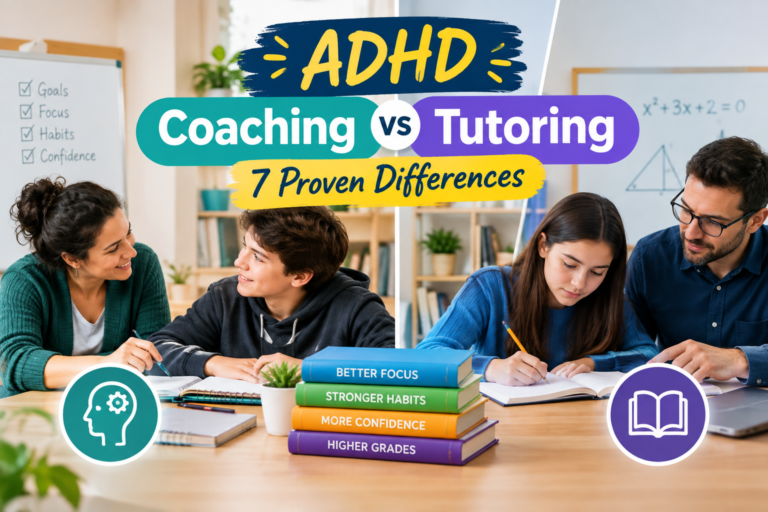
- ADHD Coaching: Certified ADHD coaches specialize in building motivation systems, habit scaffolding, and emotional regulation strategies tailored specifically to your neurodivergent strengths. Look for credentials from ACO, PAAC, or ICF.
- Cognitive Behavioral Therapy (CBT): CBT adapted for adult ADHD helps identify and dismantle the shame loop, cognitive avoidance, and low self-esteem that accumulate after years of struggling with initiation.
- Psychiatry and Medication: Stimulant and non-stimulant medications directly regulate the availability of dopamine and norepinephrine in your prefrontal-striatal pathways. This raises your baseline arousal, reducing the daily effort required to initiate and complete routine tasks. Consult a psychiatrist or medical doctor.
- Regional Directory Listings:
- United States: Search local support networks and clinical specialists through CHADD or *ADDA*.
- United Kingdom: Consult NHS accessibility teams or contact The ADHD Foundation for adult diagnosis guidelines.
- Canada: Connect with CADDAC to access webinars, parent support groups, and adult lists.
- Australia: Contact the ADHD Australia network or search the professional database on AADPA.
Frequently Asked Questions
What is an ADHD dopamine menu?
An ADHD dopamine menu is a structured, visual directory of stimulating activities categorized into restaurant sections (Appetizers, Entrées, Sides, Desserts, Specials) designed to help you refuel your brain’s dopamine levels in a healthy, pre-planned way when you feel stuck or frozen.
How do I build a dopamine menu?
Build a dopamine menu by brainstorming all activities that make you feel happy or energized. Group them into categories based on time limits and effort required, set physical boundaries on your “Dessert” activities (like social media), and display the menu on your workspace wall or desk.
What are healthy appetizers for a dopamine menu?
Healthy appetizers are quick, low-effort stimulators that take 5 to 10 minutes. Examples include stretching, doing jumping jacks, dancing to a favorite song, splashing cold water on your face, stepping outside, cuddling a pet, or reading one page of a comic book.
Why does my ADHD brain seek dopamine impulsively?
Your brain seeks dopamine impulsively because it operates with a chronic baseline deficit of this neurotransmitter. When forced to perform low-stimulation, routine tasks, your prefrontal networks enter a state of under-arousal, prompting your brain to seek immediate chemical spikes.
Can medication substitute for a dopamine menu?
No. While medication increases the baseline availability of dopamine in your prefrontal cortex, it does not instruct you *where* to direct your focus. A dopamine menu acts as a behavioral guide, helping you direct your chemically stabilized focus onto healthy, structured tasks.
Conclusion: Navigating Motivation with Compassion
Managing your motivation with ADHD is not about trying to force yourself to work through chemical depletion. It is about understanding your unique neurochemistry and building healthy, visual systems that keep your brain’s engine fueled.
Be gentle with yourself when you experience task paralysis. Recognize it as a signal that your brain’s dopamine reserves are low. Grab a healthy Appetizer from your wall menu, pair your boring chores with sensory Sides, and set boundaries on your Desserts. Work *with* your neurodivergent interest system to create a daily routine that supports your focus and self-worth.
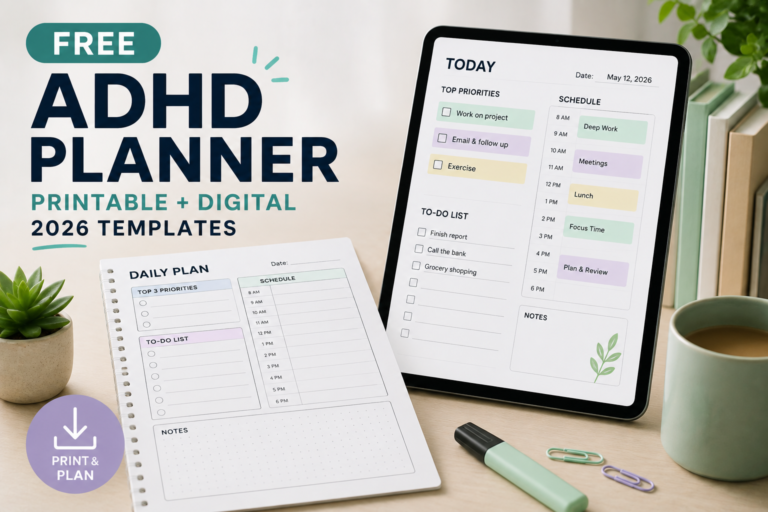
Ready to fuel your daily focus? Track your habits and dopamine levels using our visual ADHD Habit Tracker. If you want to structure your daily tasks and energy containers, utilize the visual layouts in the ADHD Daily Planner or build a custom routine sequence using the ADHD Routine Generator.
[…] your child feels safe, their brain can learn. For broader executive function support, integrate our ADHD dopamine menu into study […]