ADHD Emotional Regulation: Managing Intense Emotions and Reclaiming Balance
You are sitting in a meeting when a colleague makes a minor, passing criticism of your latest project. To anyone else, it is a routine piece of feedback. But to you, it feels like a physical blow. Your heart immediately begins to race, your chest tightens, and a wave of intense heat spreads across your face. Within seconds, you are consumed by a mixture of white-hot anger and crushing embarrassment. You want to either snap back with a defensive comment or run out of the room.
For the next three hours, you cannot focus on anything else. You replay the comment in your head, blowing it up into a sign that your job is in jeopardy and your colleagues secretly dislike you. You feel completely out of control, hijacked by an emotional reaction that you know, logically, is disproportionate to the event.
If you have Attention Deficit Hyperactivity Disorder (ADHD), this experience is familiar. For decades, ADHD was defined almost entirely as a disorder of attention and hyperactivity—focusing on lost keys, running minds, and physical restlessness. However, both clinical research and lived experience confirm that emotional dysregulation is not a secondary symptom; it is a core, defining feature of the ADHD nervous system.
This comprehensive guide provides an evidence-based, clinical-grade framework for **ADHD Emotional Regulation**. You will learn the neurobiology behind why your brain struggles with **emotional control**, discover how to distinguish between **adhd mood swings** and other mood disorders, and gain access to an actionable, step-by-step system detailing **how to regulate emotions with adhd** without shame. By utilizing these specialized **adhd emotional regulation** systems, you can learn to manage intense emotions, rebuild your relationships, and improve your daily life.
What Causes Emotional Dysregulation in ADHD?
To learn how to regulate emotions, we must first address the foundational question: **What causes ADHD emotional dysregulation?**
Emotional dysregulation in ADHD is not a character flaw, a lack of maturity, or a sign of poor self-discipline. It is a direct result of how the ADHD brain is structured and how it processes neurotransmitters. The primary contributors to these intense emotional experiences include:
- Prefrontal Cortex Under-Activation: The prefrontal cortex (PFC) acts as the brain’s executive control center, responsible for self-regulation, planning, and inhibiting impulses. In ADHD, the PFC receives insufficient levels of dopamine and norepinephrine, leaving it under-stimulated. When an emotional trigger occurs, the PFC struggles to send “braking” signals to quiet the emotional center of the brain.
- Amygdala Over-Responsiveness: The amygdala is the emotional alarm system of the brain, responsible for detecting threats and initiating the fight-or-flight response. Without strong regulatory signals from the prefrontal cortex, the ADHD amygdala fires rapidly and intensely in response to everyday stressors, treating a minor social setback as a major survival emergency.
- Deficits in Working Memory: Working memory allows us to hold multiple pieces of information in our minds at once to make balanced decisions. When an ADHD individual experiences an emotion, that emotion completely fills their limited working memory capacity. The brain temporarily “loses” the ability to access past experiences, logical context, or future consequences, making the current feeling the only reality that exists.
- Dopaminergic Dysregulation: Because the ADHD brain is constantly seeking dopamine to satisfy its chemical deficit, it is highly sensitive to changes in reward, novelty, and stimulation. A sudden loss of interest or a minor disappointment triggers a sharp drop in dopamine, resulting in an intense emotional crash.
What Does ADHD Emotional Dysregulation Look Like?
Emotional dysregulation manifests differently in adults with ADHD than it does in other conditions. Recognizing these patterns is the first step toward building **emotional control** systems.
| Symptom Category | What Is Happening Neurologically | How It Feels in Daily Life |
|---|---|---|
| Rejection Sensitive Dysphoria (RSD) | Extreme emotional pain triggered by real or perceived rejection, criticism, or failure. | Feeling physically sick and spiraling for days after receiving constructive criticism on a draft. |
| Intense Impulsivity | The inability to inhibit immediate emotional expressions before the prefrontal cortex can process the situation. | Blurting out a defensive or angry comment in a meeting, only to regret it immediately afterward. |
| Emotional Hyperfocus | An emotion fills the working memory entirely, blocking out logical context or other feelings. | Becoming so angry about a minor driving incident that your entire day is ruined and you cannot focus on work. |
| Rapid adhd mood swings | Emotional shifts that occur quickly in response to immediate external triggers or dopamine drops. | Feeling excited and motivated at 9:00 AM, completely defeated by 10:00 AM due to a minor delay, and energetic again by noon. |
| Sensory-Emotional Overload | Sensory overload (loud noises, bright lights) triggers emotional irritability and anger. | Snapping at a family member because the television is too loud and you are trying to read an email. |
Scientific Background & Comparative Neurobiology
To manage ADHD emotions, we must understand the specific neurological dynamics that separate the ADHD nervous system from neurotypical brains and other conditions.
The 30% Rule with ADHD and Emotional Maturity
A key clinical framework for understanding ADHD is Dr. Russell Barkley’s **30% rule with ADHD**. This rule states that individuals with ADHD are developmental delayed in their executive functioning and self-regulation skills by approximately 30% compared to their chronological age.
While this rule is frequently applied to time management and organization, it is equally true for emotional regulation. A 25-year-old adult with ADHD has the intellectual capacity of their age, but their emotional self-regulation maturity is closer to that of a 17-year-old.
When adults with ADHD burn out, it is often because they expect themselves to handle complex emotional challenges (workplace conflicts, financial anxiety, relationship boundaries) with the maturity of their chronological age, while their internal wiring lacks the top-down cognitive brakes to do so. Acknowledging this developmental gap is crucial for practicing self-compassion and building age-appropriate external supports.
Differentiating ADHD Mood Dynamics from Other Conditions
Understanding the differences between ADHD emotional patterns and other mental health conditions is essential for receiving correct clinical treatment.
- adhd mood swings vs bipolar disorder: Bipolar mood shifts are characterized by long cycles of mania and depression that last for weeks or months, occurring independently of daily life events. In contrast, ADHD mood shifts are rapid, lasting only hours, and are almost always triggered by immediate external events, such as a perceived rejection, a sudden change in plans, or a drop in dopamine.
- adhd emotional regulation vs borderline personality disorder (BPD): BPD involves a pervasive pattern of instability in interpersonal relationships, self-image, and affect, often driven by a deep fear of abandonment. While ADHD features rejection sensitivity, BPD emotional struggles are tied to identity instability and self-harming tendencies, whereas ADHD emotional reactions are rapid, transient, and stem from executive function deficits rather than structural identity struggles.
- adhd emotional regulation vs clinical depression: Clinical depression presents as a persistent state of flat emotions (anhedonia), hopelessness, and fatigue that remains constant regardless of positive events. ADHD emotional dysregulation is characterized by highly reactive emotions—an ADHD individual can feel deeply sad one hour and highly excited the next if presented with a novel, dopamine-rich activity.
The ADHD Emotional Regulation Self-Assessment
Use this informal quiz to assess how emotional dysregulation impacts your daily life. You can use this simple adhd burnout quiz to check your current status. For each statement, choose the score that best represents your experience over the past month:
* 0: Never or rarely
* 1: Sometimes
* 2: Frequently
* 3: Almost always
| Statement | Score (0–3) |
|---|---|
| 1. I experience sudden, intense emotional reactions that feel impossible to control in the moment. | ______ |
| 2. A minor criticism or rejection can ruin my mood for the entire day. | ______ |
| 3. I struggle to calm down once I become angry, anxious, or excited. | ______ |
| 4. I make impulsive decisions based on temporary emotional states (e.g., quitting a task, sending an angry text). | ______ |
| 5. My emotions completely fill my head, making it impossible to think logically about the situation. | ______ |
| 6. I experience rapid mood shifts in response to minor changes in my environment or schedule. | ______ |
| 7. Loud environments, clutter, or sensory distractions make me irritable and quick-tempered. | ______ |
| 8. I avoid projects, social events, or jobs because I fear the emotional pain of failure or rejection. | ______ |
| Total Score: | / 24 |
Scoring Key
- 0–8: Mild Challenges. Your emotional regulation is functional. Focus on proactive stress management and basic self-care.
- 9–16: Moderate Dysregulation. Emotional volatility is impacting your productivity and relationships. Implementing targeted regulation strategies is highly recommended.
- 17–24: Severe Emotional Dysregulation. Intense emotional reactions are causing significant distress, relationship strain, or workplace difficulties. It is recommended to use a structured regulation framework and consider professional support.
Real-World Emotional Scenarios
Scenario A: The Emotional Hijack (Marcus’s Story)
Marcus is a 28-year-old engineer with ADHD. One afternoon, his manager sends a Slack message: *”Hey Marcus, please stop by my office at 4:00 PM to review the project draft.”*
Without emotional regulation systems, Marcus’s mind immediately goes into fight-or-flight mode. He assumes the draft was terrible, he has made a critical error, and he is going to be fired. His working memory is completely filled by panic.
He spends the next two hours staring at his screen, unable to work. His chest feels tight, and he is highly irritable, snapping at a colleague who asks him a simple question.
By the time he walks into his manager’s office at 4:00 PM, he is defensive and tense. When his manager suggests a minor layout change, Marcus immediately snaps, *”Well, if you don’t like my work, maybe you should have someone else do it!”*
He walks out, leaving his manager confused and concerned about his professionalism. Marcus spends the weekend in a shame spiral, convinced he has ruined his career.
Scenario B: Navigating with a Plan (Sarah’s Story)
Sarah, a 31-year-old freelance writer, receives an email from a regular client requesting major edits to an article she spent a week writing.
Initially, Sarah feels the familiar rush of rejection sensitive dysphoria (RSD)—her throat tightens, and she feels tears coming.
However, Sarah has developed an emotional regulation plan. Instead of replying immediately, she initiates her “cooling protocol.” She closes the email, sets a timer for 20 minutes, and steps away from her desk.
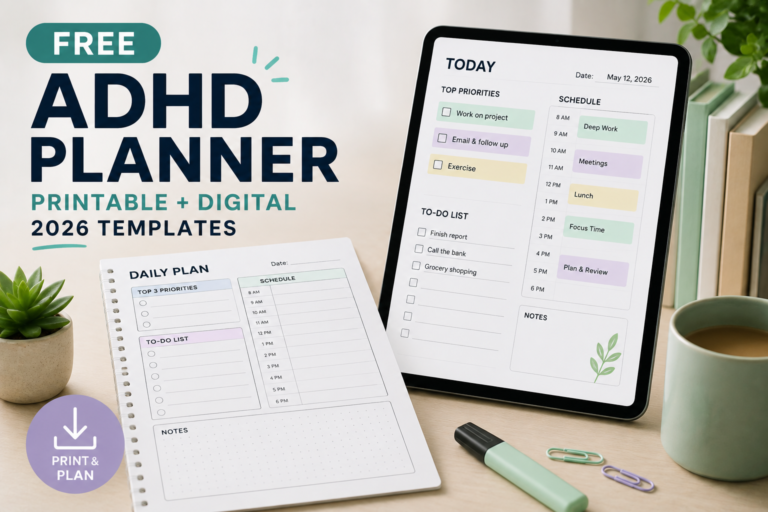
She uses the ADHD Daily Planner to block out a specific time slot the following day to address the feedback, moving the task out of her immediate cognitive space. She drinks a cold glass of water and walks around the block to help regulate her nervous system.
When the timer rings, her emotional system has stabilized. She is able to review the feedback logically, realizing the edits are minor formatting changes. She replies professionally, maintaining a strong client relationship and protecting her energy.
Scenario C: Relational Pacing
Maya lives with her partner, Leo. When she entered severe burnout and struggled with chores and communication, they avoided arguments by agreeing to a temporary “demand holiday.” Leo took over daily planning and shopping for two weeks, while Maya communicated her daily energy using a simple 1 to 5 scale. This shame-free support accelerated Maya’s recovery and prevented partner resentment.
How to Regulate Emotions with ADHD: The Actionable Framework
You cannot stop intense emotions from occurring in your ADHD brain, but you can change how your system processes and reacts to them. The following step-by-step framework details **how to regulate emotions with adhd** by building cognitive buffers and physical calming strategies.
Step 1: The Physiological Cool-Down (Immediate Response)
When an emotional trigger occurs, your amygdala hijacks your brain. Your first goal is to calm your physical nervous system so your prefrontal cortex can come back online.
- The 90-Second Rule: Neuroanatomist Dr. Jill Bolte Taylor notes that the chemical lifespan of an emotional trigger is approximately 90 seconds. If you do not feed the emotion with thoughts, the physical rush will peak and dissipate. When triggered, commit to doing and saying absolutely nothing for 90 seconds.
- Change the Temperature: Splash ice-cold water on your face or hold an ice cube in your hand. The sudden temperature drop activates the mammalian dive reflex, slowing your heart rate and interrupting the emotional signal.
- Bilateral Stimulation: Engage in activities that cross the body’s midline, such as walking, tapping your shoulders, or listening to bilateral music. This helps distribute cognitive load across both hemispheres of the brain, reducing emotional intensity.
- Box Breathing: Inhale for 4 seconds, hold for 4 seconds, exhale for 4 seconds, and hold for 4 seconds. Repeat this cycle four times to activate your parasympathetic nervous system.
Step 2: The Cognitive Pause (Slowing Down the Reaction)
Once your body is calm, you must create a boundary between the emotional event and your behavioral response.
- Separate Fact from Story: Draw a line down a piece of paper. On the left side, write down the objective facts of the situation (e.g., *”My manager sent a email asking to meet”*). On the right side, write down the story your ADHD brain created (e.g., *”I am going to get fired because I am bad at my job”*). Recognizing the story helps detach you from the intense feeling.
- Name the Emotion: Use a precise word to describe what you are feeling. Instead of saying *”I feel bad,”* say *”I am experiencing rejection sensitivity”* or *”I am feeling overwhelmed by sensory noise.”* Labeling the emotion engages the prefrontal cortex, reducing amygdala activity.
- Use the “Verify” Strategy: If your emotion involves another person, ask for clarification before reacting. Say: *”My brain is interpreting your comment as criticism. Is that what you intended?”* This prevents arguments caused by emotional misinterpretations.
Step 3: Dopamine and Sensory Management (Proactive Scaffolding)
A dysregulated nervous system is highly vulnerable to emotional triggers. You must proactively manage your energy and dopamine levels.
- Design a Dopamine-Stable Schedule: Low dopamine levels lead to increased emotional volatility. Use the ADHD Routine Generator to design daily schedules that integrate regular dopamine resets, preventing the energy crashes that trigger mood swings.
- Reduce Sensory Noise: Sensory overload is a major source of emotional irritability. Wear loop earplugs in loud environments, declutter your desk, and take regular quiet breaks throughout the day.
- Simplify Complex Tasks: The frustration of managing complex tasks often triggers emotional outbursts. Break down large projects into manageable steps using the ADHD Task Breakdown Tool to prevent task paralysis and emotional overload.
Step 4: Shame Reduction (Post-Trigger Recovery)
Shame is the fuel that keeps emotional dysregulation burning. You must change your internal dialogue after an emotional episode occurs.
- Practice the 30% Self-Compassion Check: When you experience a dysregulated moment, remind yourself of your executive age: *”My executive system was overwhelmed. I reacted from my 17-year-old capacity, not my chronological age, and that is a developmental part of my ADHD.”*
- Repair, Don’t Grovel: If your emotional reaction impacted someone else, offer a simple, structured apology: *”I was emotionally overwhelmed and reacted defensively. I am sorry for my tone. I value our conversation and want to discuss this when my system is calm.”*
- Record What Went Well: Keep a record of times when you successfully managed your emotional reactions. This helps build confidence and counteracts the ADHD brain’s natural negativity bias.
Clinical Pathways: Medication, Therapy, and Support Networks
For many adults, lifestyle strategies are most effective when combined with professional care systems.
The Role of ADHD Medication in Emotional Control
A common question in treatment is: **how does adhd medication impact emotions?** Stimulant medications (like Adderall, Ritalin, and Vyvanse) are highly effective at improving focus, but they can also play a major role in emotional regulation.
By increasing dopamine and norepinephrine levels in the prefrontal cortex, stimulants help strengthen the brain’s top-down self-regulation pathways, allowing you to pause before reacting to emotional triggers.
However, if your medication dose is too high, or during a crash, you may experience “emotional blunting” (feeling flat) or increased irritability.
Non-stimulants (like Atomoxetine or Guanfacine) are often added to help manage emotional reactivity, particularly Rejection Sensitive Dysphoria (RSD), as they help stabilize the autonomic nervous system.
Therapeutic Interventions
Specialized therapies can help build emotional control skills:
- Cognitive Behavioral Therapy (CBT): Helps identify the automatic thoughts and stories that trigger intense emotions, allowing you to reframe situations before they spiral.
- Dialectical Behavior Therapy (DBT): Focuses specifically on distress tolerance, emotion regulation, mindfulness, and interpersonal effectiveness skills tailored for intense emotional systems.
- ADHD Coaching: Helps you implement daily routines, environmental scaffolds, and communication strategies to manage triggers before they cause dysregulation.
Regional Support Networks
Consider reaching out to these organizations for professional directories and educational resources:
- United States: CHADD (Children and Adults with Attention-Deficit/Hyperactivity Disorder)
- United Kingdom: The ADHD Foundation
- Canada: CADDAC (Centre for ADHD Awareness Canada)
- Australia: ADHD Australia
Printable ADHD Emotional Regulation Templates
Template 1: The Emotional Emergency Card
Print this card, write your responses, and carry it with you. Refer to it the moment you feel your emotional alarm system firing.
• __________________________________________________________________2. Immediate Physical Action (Do this first):
• Go to a quiet bathroom / Step outside for 3 minutes.
• Drink a cold glass of water / Hold an ice cube.
3. Internal Statement to Repeat:
• “My amygdala is firing. I will say and do nothing for 90 seconds. I am safe.”
4. Script to Say to Others:
• “I am feeling overwhelmed right now. I need 10 minutes to process this, and then I will reply.”
Template 2: The Pause & Verify Worksheet
Use this worksheet to process intense emotional events after they occur, helping rewrite the stories your brain creates.
| 🔍 The ADHD Pause & Verify Worksheet | |
|---|---|
| The Triggering Event: What objectively happened? (Keep it factual). |
__________________________________________________________________ |
| The ADHD Story: What did my brain tell me this meant? |
__________________________________________________________________ |
| The Physical Sensation: Where did I feel this emotion in my body? |
__________________________________________________________________ |
| The Reality Check: What evidence supports or refutes this story? |
__________________________________________________________________ |
| My Next Step: How can I address the facts of this situation calmly? |
__________________________________________________________________ |
Frequently Asked Questions
How do you regulate emotions with ADHD?
To regulate emotions with ADHD, you must calm your physical nervous system using immediate cooling strategies (e.g., temperature changes, box breathing, 90-second pause), create cognitive boundaries between facts and stories, manage your dopamine and sensory environment proactively, and work with clinical interventions like ADHD medication or therapy if needed.
What is ADHD emotional dysregulation?
ADHD emotional dysregulation is the brain’s difficulty in managing the intensity and expression of emotional responses. It stems from executive functioning deficits in the prefrontal cortex, which struggles to send regulatory signals to calm the amygdala, resulting in intense emotions, rapid mood shifts, and high reactivity to stress.
How can you tell the difference between ADHD mood swings and bipolar disorder?
ADHD mood swings are rapid, lasting only hours, and are almost always triggered by immediate external events like feedback, delays, or sensory overload. Bipolar mood shifts occur in cycles lasting weeks or months, are much more severe, and generally occur independently of external daily triggers.
What causes ADHD mood swings?
ADHD mood swings are caused by the lack of top-down emotional filtering in the brain, working memory deficits that allow a single emotion to block out logical context, and sudden fluctuations in dopamine levels that trigger motivation peaks and emotional crashes.
Does ADHD medication help with emotional regulation?
Yes. By increasing dopamine and norepinephrine levels in the prefrontal cortex, ADHD medication helps improve self-regulation, providing a “cognitive pause” that allows individuals to evaluate and choose their reactions to emotional triggers instead of responding impulsively.
Conclusion: Embracing Your Emotional Rhythms
Emotional dysregulation is a challenging, core aspect of living with ADHD. However, intense emotions are not a failure of character; they are a sign of a highly reactive, dopamine-sensitive nervous system.
By building systems that respect your executive capacity, utilizing physical calming strategies, and managing your environment, you can navigate your emotional rhythms with confidence and clarity.