ADHD Burnout Recovery Plan: How to Heal Executive Exhaustion and Regain Your Life
You are staring at a screen that has been blank for forty-five minutes. Your phone is buzzing in your hand, but looking at the screen feels like trying to read a foreign language. The cursor blinks at you, an accusing little line that seems to highlight every failed promise, every missed deadline, and every unbegun project from the last month. You know exactly what you need to do—or at least you did an hour ago—but now your mind is a heavy, static-filled fog.
If you have Attention Deficit Hyperactivity Disorder (ADHD), this is the wall. It is not standard tiredness, and it is not a lack of willpower. It is the neurological crisis of ADHD exhaustion.
For months, or perhaps years, you have relied on adrenaline, deadline-panic, caffeine, and sheer masking to force your brain through daily demands. But today, the emergency fuel tank is dry. The strategies you usually use to “force” focus are no longer working. You have entered a state of complete executive collapse.
This comprehensive guide provides an evidence-based, clinical-grade ADHD burnout recovery plan. You will learn the science behind why your brain has hit this wall, discover the core differences between neurodivergent and neurotypical fatigue, and gain access to an actionable, step-by-step framework detailing adhd burnout how to recover without shame. Through clinical insights and practical adhd burnout recovery strategies, you can break the exhausting cycles of overload and rebuild a life that works with, rather than against, your unique nervous system.
What Causes ADHD Burnout?
To understand how to heal, we must first address the foundational question: What causes ADHD burnout?
Burnout is generally defined as a state of emotional, physical, and mental exhaustion caused by excessive and prolonged stress. However, for neurodivergent individuals, the causes are deeply tied to the daily friction of navigating a world optimized for neurotypical brains. The primary contributors to this collapse include:
- Chronic Masking and Compensation: People with ADHD must constantly expend cognitive energy to hide their symptoms, mimic neurotypical behaviors, and suppress natural impulses to meet social expectations. This constant self-monitoring drains executive reserves.
- The Dopamine-Deficit Push: Because the ADHD brain has fewer dopamine receptors and lower levels of active dopamine, task initiation is naturally difficult. To compensate, adults with ADHD often use stress, anxiety, and last-minute panic as artificial stimulants to force their brains into action. Running on adrenaline and cortisol for long periods is biochemically unsustainable.
- Sensory and Cognitive Overload: A lack of natural cognitive filtering means that the ADHD brain struggles to screen out irrelevant sensory details, emotional inputs, and background distractions. This results in a state of sensory processing overload that eventually leads to a total system shutdown.
- Executive Dysfunction Amplification: As demands accumulate, the brain’s ability to plan, prioritize, delegate, and self-regulate becomes severely compromised. This leads to a state where every task—no matter how small—demands the same high level of cognitive energy.
What Does ADHD Burn Out Look Like?
When executive dysfunction is pushed to its absolute limit, it manifests in a set of symptoms that can be terrifying if you do not understand what is happening. So, what does ADHD burn out look like?
In daily life, the symptoms of this collapse manifest across three distinct domains: physical, cognitive, and emotional. Understanding these burnout symptoms adhd adults encounter is critical for early detection and prevention.
| Domain | Core Burnout Symptoms (ADHD) | Real-World Manifestation |
|---|---|---|
| Physical Exhaustion | Sensory hypersensitivity, chronic physical fatigue, sleep disturbances, and physical tension or headaches. | Fluorescent lights feel physically painful; you sleep for ten hours but wake up feeling completely unrefreshed. |
| Cognitive Collapse | Severe task paralysis, memory lapses, time blindness, and an inability to process written or spoken language. | Staring at a simple email for hours, unable to formulate a response; missing appointments you just wrote down. |
| Emotional Depletion | Intense emotional dysregulation, chronic guilt and shame, detachment, and rejection sensitive dysphoria (RSD) spikes. | Bursting into tears over a minor inconvenience; feeling like an absolute failure who is letting everyone down. |
| Loss of Coping Scaffolds | The sudden failure of systems you previously relied on (calendars, reminders, routines). | Completely forgetting to check your planner, losing track of your phone and keys hourly, and ignoring notifications. |
The ADHD Burnout Cycle in Adults
For many adults, burnout is not a one-time event but a recurring pattern. The adhd burnout cycle adults experience typically follows a predictable six-stage trajectory:
- The Over-Compensation Phase: Driven by guilt over past mistakes or a desire to prove capability, you take on too many projects, commitments, and responsibilities. You tell yourself, “This time, I will stay on top of things.”
- The Adrenaline Run: To keep up with these commitments, you push through fatigue by using hyperfocus, urgency, caffeine, and anxiety. You feel highly productive, but your nervous system is operating in a constant state of high-alert survival.
- The Warning Signals: Subtle symptoms begin to emerge. You start misplacing things more frequently, experiencing emotional volatility, and struggling with sensory overload. You ignore these signs and push harder.
- The Executive Crash: The brain reaches its absolute biochemical limit. Adrenaline can no longer bridge the gap. You hit the wall, experiencing severe task paralysis and profound physical fatigue.
- The Shame Spiral: As tasks pile up and commitments are missed, intense feelings of guilt, shame, and self-criticism take over. You interpret the physiological collapse as a moral failure.
- The Urgent Restart: Determined to make up for lost time and repair your reputation, you suddenly jump back into action, committing to new projects and restarting the cycle from phase one.
Scientific Background & Comparative Neurobiology
To build an effective recovery plan, we must examine the specific neurological dynamics of the ADHD brain. ADHD is not simply a behavioral pattern; it is a structural and chemical variance in how the brain processes reward, attention, and executive execution.
Dopamine Regulation and Executive Dysfunction
The ADHD brain is characterized by a dysregulation of the dopamine reward system. Dopamine is the neurotransmitter responsible for generating motivation, anticipation, and the feeling of reward. It acts as the brain’s natural currency for initiating action.
In a neurotypical brain, dopamine levels rise in anticipation of a task, providing the cognitive energy needed to start. In an ADHD brain, dopamine levels remain flat, making task initiation feel physically and mentally painful. To overcome this natural barrier, the ADHD brain must rely on external stressors (deadlines, fear of failure, interpersonal conflict) to trigger a surge of adrenaline and norepinephrine.
While effective in the short term, chronic reliance on these stress hormones is highly toxic to the prefrontal cortex—the region responsible for executive function. Over time, this chronic stress response wears down the neural pathways, leading directly to a state of profound cognitive depletion.
What is the 30% Rule with ADHD?
A critical concept developed by ADHD pioneer Dr. Russell Barkley is the **What is the 30% rule with ADHD?** explanation. This developmental rule states that individuals with ADHD are generally about 30% behind their neurotypical peers in executive age and executive functioning skills.
This means that a 30-year-old adult with ADHD may have the cognitive intelligence of their chronological age, but their executive age (the capacity to organize, regulate emotions, manage time, and sustain attention) is closer to that of a 21-year-old (30 minus 30%).
Understanding the 30% rule is vital for burnout recovery. Adults with ADHD often burn out because they try to meet societal expectations based on their chronological age, completely ignoring their executive age. When you force a 21-year-old’s executive capacity to manage a 30-year-old’s complex life demands without external scaffolding, the system inevitably collapses.
Differentiating Burnout and Neurodivergence
It is common to confuse ADHD burnout with other conditions, but they require distinct recovery approaches.
- adhd burnout vs normal burnout: Normal burnout is typically tied to a specific external environment, such as a toxic workplace or a demanding project, and improves when that environment changes. ADHD burnout, however, is a systemic executive depletion that follows the individual across all areas of life, stemming from the chronic effort of managing executive dysfunction itself.
- adhd burnout vs autistic burnout: Autistic burnout is primarily driven by the sensory and social exhaustion of masking autistic traits and navigating sensory overload. ADHD burnout is driven by executive dysfunction, dopamine depletion, and the cycles of hyperfocus and crash. While they overlap, autistic burnout recovery requires intense sensory isolation and social withdrawal, whereas ADHD burnout recovery requires dopamine restoration, low-demand novelty, and structural external scaffolds.
- adhd burnout vs depression: Depression is characterized by flat emotions, a general loss of interest in all activities (anhedonia), and a feeling of worthlessness. ADHD burnout is characterized by extreme cognitive and physical exhaustion, but the desire to do things is still present—you want to work, paint, or clean, but your brain’s engine simply cannot turn over.
The ADHD Burnout Quiz
Use this informal self-assessment tool to evaluate your current level of cognitive and executive depletion. You can use this simple adhd burnout quiz to check your current status. For each statement, choose the score that best represents your experience over the past two weeks:
* 0: Never
* 1: Rarely
* 2: Sometimes
* 3: Frequently
| Question | Score (0–3) |
|---|---|
| 1. I feel physically exhausted even when I have had plenty of sleep. | ______ |
| 2. Tasks that used to take me ten minutes now feel like climbing a mountain. | ______ |
| 3. I am experiencing severe task paralysis, unable to start even simple daily tasks. | ______ |
| 4. My systems (calendars, reminders, planners) feel completely overwhelming to look at. | ______ |
| 5. My sensitivity to noise, light, textures, or crowds has noticeably increased. | ______ |
| 6. I feel a constant, heavy sense of shame and guilt because I cannot keep up. | ______ |
| 7. I find myself ignoring emails, texts, and phone calls because replying feels impossible. | ______ |
| 8. I am experiencing frequent spikes of irritation, emotional volatility, or tearfulness. | ______ |
| Total Score: | / 24 |
Scoring Key
- 0–8: Mild Fatigue. Your nervous system is tired but functional. Focus on daily boundaries and scheduling buffer days.
- 9–16: Moderate Depletion. You are entering the burnout zone. You need to immediately implement demand reduction and start resting your executive functions.
- 17–24: Severe Burnout. Your executive system has collapsed. You need to initiate a formal ADHD burnout recovery plan immediately, prioritize physiological stabilization, and seek support if possible.
Real-World Burnout Scenarios
Scenario A: The Crash (Sarah’s Story)
Sarah, a 34-year-old marketing coordinator with undiagnosed ADHD, masked her executive struggles for years by working late, checking documents repeatedly, and relying on deadline anxiety to perform. When a reorganization doubled her workload, she tried to push harder, sacrificing sleep.
Eventually, her executive system stalled. One morning, she sat at her computer unable to type, the words on screen looking like symbols. She called in sick, but instead of recovering, spent the day overwhelmed by guilt and fear of being fired. Because she tried to return to work without an ADHD burnout recovery plan, she immediately crashed again, leading to a prolonged absence.
Scenario B: Healing with a Plan (David’s Story)
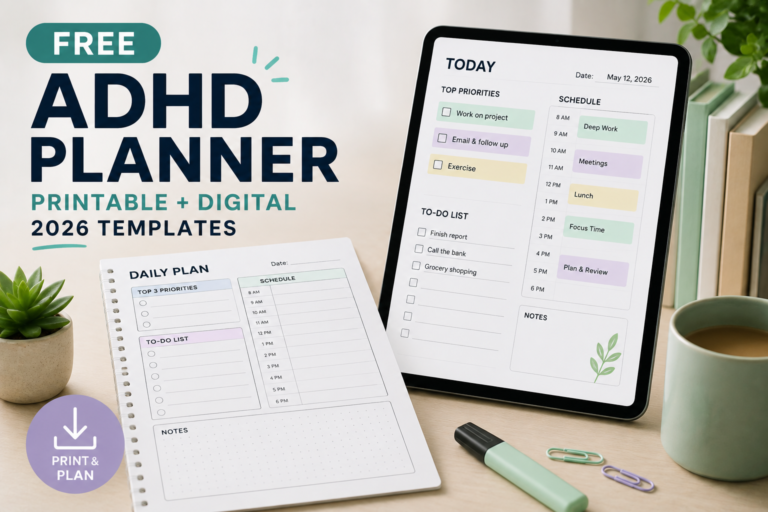
David, a 42-year-old web developer, noticed his sensory sensitivity spiking and forgetfulness increasing during a major project. Recognizing these warning signs, he implemented an executive recovery plan. He delegated minor tasks, froze new commitments, and spent the weekend in low-stimulation environments. He also switched to the visual and simplified layouts of the ADHD Daily Planner to reduce cognitive load. By scaling back early and managing his executive age proactively, David stabilized his system within two weeks.
Scenario C: Relational Pacing
Maya lives with her partner, Leo. When she entered severe burnout and struggled with chores and communication, they avoided arguments by agreeing to a temporary “demand holiday.” Leo took over daily planning and shopping for two weeks, while Maya communicated her daily energy using a simple 1 to 5 scale. This shame-free support accelerated Maya’s recovery and prevented partner resentment.
How Do You Deal with ADHD Burnout? The 4-Phase Recovery Plan
If you are currently in a state of collapse, the question is simple: How do you deal with ADHD burnout?
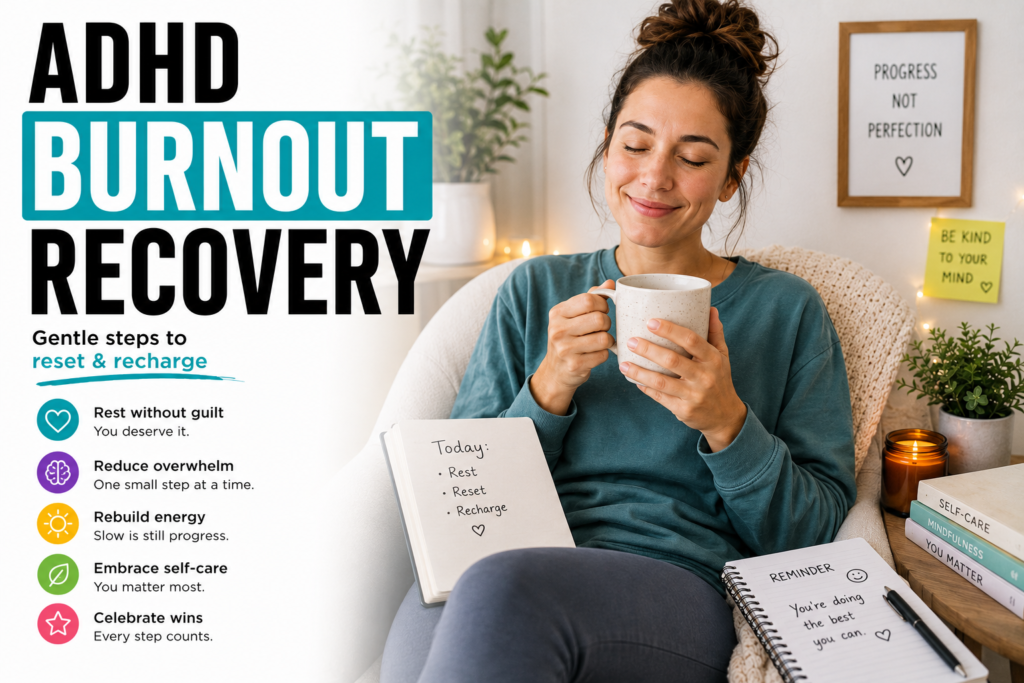
You cannot fix an executive collapse by applying the same planning and productivity strategies that caused the overload. Recovering from ADHD burnout requires a specialized, neurodivergent-friendly approach designed to restore dopamine reserves and reduce cognitive friction. The following four-phase recovery plan is structured to help you heal systematically.
Phase 1: Physiological Stabilization (Days 1–7)
The goal of this phase is to stop the cognitive bleed and lower your nervous system’s stress levels.
- Implement a Low-Stimulation Protocol: Spend at least 30 minutes a day in a low-sensory environment. Turn off the lights, use noise-canceling headphones, and close your eyes. Give your sensory system a break from processing the environment.
- Address the Sleep Debt: Sleep is when the brain clears out metabolic waste. Prioritize rest, but do not force a rigid sleep schedule if your sleep cycle is dysregulated. Focus on resting your body, even if you are just lying down without screens.
- Eliminate “Shoulds”: For the first seven days, write down all the things you feel you “should” do, and cross out at least 80% of them. Limit your focus to absolute survival needs: eating, drinking water, and basic hygiene.
- Release Physical Tension: The ADHD brain under stress carries immense physical tension. Use gentle movement, warm baths, or weighted blankets to signal to your body that it is safe to relax.
Phase 2: Radical Demand Reduction (Weeks 2–4)
In this phase, you must aggressively lower the demands placed on your executive system. This is one of the most effective adhd burnout recovery strategies.
- Perform a Demand Audit: Write down every single commitment, chore, task, and project currently on your plate. Categorize them into: *Must Keep* (survival/employment critical), *Can Delegate*, *Can Defer* (push to next month), and *Can Drop*.
- Declare a Commitment Freeze: Do not take on any new responsibilities, projects, or social commitments for at least three weeks. Practice saying: “I do not have the cognitive capacity for this right now, but I will let you know if that changes in the future.”
- Adopt Low-Friction Systems: Switch to systems that require minimal executive energy. Use paper plates, order pre-made meals, or leave clean laundry in baskets rather than folding it. Lower the bar for what is “acceptable” in your daily life.
Phase 3: Dopamine Rehabilitation (Weeks 5–8)
Once your system has stabilized, you can begin rebuilding your dopamine reserves. This is a core part of adhd burnout how to recover safely.
- Introduce Low-Friction Novelty: The ADHD brain needs novelty to generate dopamine, but high-friction activities will trigger exhaustion. Introduce small, low-stakes changes: take a new walk route, listen to a new genre of music, or read a book on an interesting topic.
- Engage in Play: Spend time on activities that have no goal, deadline, or expectation of performance. Paint poorly, play a cozy video game, or build with LEGO. The goal is to experience pleasure without pressure.
- Avoid the Urgency Trap: As your energy returns, you will feel a strong temptation to immediately dive back into work to catch up. Resist this urge. Keep your activity level at 50% of what you think you can handle to avoid triggering a relapse.
Phase 4: System Redesign (Ongoing)
In the final phase, you build scaffolds to prevent future burnout cycles.
- Establish a Dopamine-First Routine: Build routines that prioritize your nervous system’s needs. Use the ADHD Routine Generator to create daily sequences that balance structure with flexibility, preventing routine fatigue.
- Use Executive Scaffolding: Do not rely on your brain’s working memory to hold details. Externalize everything. Break large, intimidating goals into small steps using the ADHD Task Breakdown Tool, which helps prevent task paralysis before it starts.
- Schedule Regular Buffer Days: Block out one day every two weeks on your calendar as a “zero-demand day.” Use this day to rest, play, and reset without any expectations.
Clinical Pathways: The Role of Medication and Professional Support
Understanding how to heal also involves navigating professional care systems, especially when lifestyle adjustments are not enough.
ADHD Burnout Medication Dynamics
A common question during executive collapse is the role of **adhd burnout medication**. Many individuals find that their usual stimulant medication (like Adderall, Ritalin, or Vyvanse) suddenly stops working or even increases their anxiety during burnout.
This occurs because stimulants stimulate the release of dopamine and norepinephrine, which are already depleted during burnout. Trying to force a exhausted brain to produce more neurotransmitters using stimulants is like stepping on the gas pedal of a car that is out of fuel—it only increases stress on the system.
During recovery, it is critical to work with your medical provider to monitor your medication. Some clinical strategies include:
- Dosage Adjustment: Temporarily lowering your stimulant dose to reduce physical anxiety and strain on the nervous system.
- Non-Stimulant Options: Exploring non-stimulants (like Atomoxetine or Guanfacine) that help stabilize norepinephrine pathways without the sharp peaks of stimulant medications.
- Addressing Co-occurring Conditions: Treating burnout-induced anxiety or sleep disturbances directly to allow the nervous system to rest.
ADHD Burnout Recovery Time Expectations
Setting realistic expectations for your **adhd burnout recovery time** is essential for preventing the shame cycle.
If you have been operating in a state of high-stress compensation for years, your nervous system cannot recover over a single weekend. A realistic timeline for moderate to severe burnout is **3 to 6 months**.
During this time, recovery will not be a straight line. You will have days of high energy followed by sudden crashes. This is a normal part of the nervous system recalibrating. Be patient with your progress and respect your body’s signals.
Regional Clinical and Coaching Resources
If you require professional support to build systems and recover, consider reaching out to these regional organizations:
- United States: CHADD (Children and Adults with Attention-Deficit/Hyperactivity Organization) offers directories for ADHD-specialized therapists, coaches, and local support groups.
- United Kingdom: The ADHD Foundation provides clinical pathways, neurodiversity training resources, and coaching recommendations through NHS and private networks.
- Canada: CADDAC (Centre for ADHD Awareness Canada) offers educational resources, advocacy tools, and provincial directories for ADHD clinics.
- Australia: ADHD Australia connects individuals with local specialists, support groups, and workplace accommodation resources.
Printable Burnout Recovery Templates
Template 1: The Daily Energy Budget (Demand Audit)
Use this visual audit sheet during Phase 2 to identify and remove tasks that are draining your executive reserves.
📊 Executive Energy Audit SheetToday’s Capacity Level: [ ] Low (1-2) | [ ] Moderate (3-4) | [ ] High (5)
1. Essential Survival Tasks (Do Only These if capacity is Low):
• __________________________________________________________________
• __________________________________________________________________
2. Tasks to Defer (Push to Next Week/Month):
• __________________________________________________________________
• __________________________________________________________________
3. Tasks to Delegate or Drop:
• __________________________________________________________________
• __________________________________________________________________
4. Low-Stimulation Reset Time Scheduled: [ ] Yes, at: ___________
Template 2: The Dopamine Menu (Dopamenu)
Fill this menu with activities that recharge your energy without demanding high executive effort. Keep it visible for low-energy days.
| 🍽️ The ADHD Dopamine Menu | |
|---|---|
| Appetizers (5–10 mins): Low-stakes quick boosts. |
• Stepping outside for fresh air • Listening to one favorite song • Stretching or simple movement |
| Entrees (30–60 mins): Engaging, creative activities. |
• Reading a book on a special interest • Goal-free creative play (drawing/crafts) • Playing a cozy video game |
| Sides (Passive Comfort): Things to enjoy in the background. |
• Ambient music or nature sounds • Diffusing a pleasant scent • Using a weighted blanket |
| Desserts (High-Dopamine Traps): Use carefully; can trigger crash. |
• Social media scrolling • High-stimulation gaming • Online shopping |
Frequently Asked Questions
How do you deal with ADHD burnout?
To deal with ADHD burnout, you must temporarily stop trying to “push through.” Implement a 4-phase recovery plan that starts with physiological stabilization (rest and sensory decompression), followed by radical demand reduction, gradual dopamine rehabilitation (play and low-stakes novelty), and eventually redesigning your lifestyle using ADHD-friendly scaffolds like the ADHD Daily Planner.
What is the 30% rule with ADHD?
The 30% rule with ADHD, developed by Dr. Russell Barkley, states that individuals with ADHD lag behind their neurotypical peers by about 30% in executive functioning age. For example, a 30-year-old adult with ADHD has the executive skills and self-regulation capacity of a 21-year-old. Recognizing this gap is essential for preventing burnout by adjusting expectations to match your actual executive capacity.
What does ADHD burn out look like?
ADHD burnout looks like severe task paralysis, chronic physical and cognitive exhaustion, heightened sensory sensitivity, and a complete breakdown of normal coping scaffolds (like planners and reminders). It is often accompanied by emotional dysregulation, self-doubt, and intense feelings of shame or guilt over dropped responsibilities.
What causes ADHD burnout?
ADHD burnout is caused by the chronic stress of masking neurodivergent traits, constant cognitive compensation for executive dysfunction, sensory overload, and the chemical depletion of dopamine reserves. It is exacerbated by the cycle of using anxiety and urgency-driven adrenaline to force task initiation.
Is ADHD burnout the same as depression?
No. While they share symptoms like low energy and withdrawal, depression involves a loss of interest in all activities (anhedonia) and feelings of worthlessness. In ADHD burnout, you still have the desire to engage in hobbies and tasks, but your executive motor lacks the neurotransmitters and energy required to initiate the action.
Why has my ADHD medication stopped working during burnout?
Stimulant medications work by releasing dopamine and norepinephrine in the brain. During severe burnout, your brain’s natural supply of these neurotransmitters is depleted. Stimulants cannot release what is not there, so they often become ineffective or cause increased physical anxiety during this state.
Conclusion: Rebuilding on Your Own Terms
Recovering from ADHD burnout is not about finding a better planning app or pushing yourself harder. It is about accepting the physiological reality of your neurodivergent nervous system. When you experience executive collapse, it is your brain’s way of demanding a structural change in how you manage your life.
Start small. Today, choose just one boundary to set. Cancel one non-essential meeting, turn off your lights for twenty minutes, or give yourself permission to leave the laundry unfolded. Real healing begins when you stop apologizing for your executive capacity and start building a life that respects your natural rhythms.