
Some people with ADHD find this arrangement useful for beginning or continuing tasks. Others find the company distracting or uncomfortable. Research is developing, and body doubling should not be presented as a proven ADHD treatment or a guaranteed productivity method.
You can try it without buying an app. Agree on a short work period with someone you trust, choose a specific starting action and check afterwards whether the arrangement helped.
What counts as body doubling?
A familiar example is doing paperwork while a friend reads at the same table. Online, you might briefly name your task, work quietly on a call and check in at the end.
The essential idea is supportive presence. The details vary:
- In person: A friend, colleague or family member works nearby.
- Live one-to-one: Two people meet online at an agreed time.
- Live group: Several people join a quiet work session, sometimes with a host.
- Recorded or ambient company: A study-with-me video or similar media provides a sense of company without a reciprocal partner.
People use the term broadly. A recorded video does not provide the same interaction or mutual commitment as a live partner, but it may be a format someone prefers. There is no established evidence-based ranking showing which format is strongest.
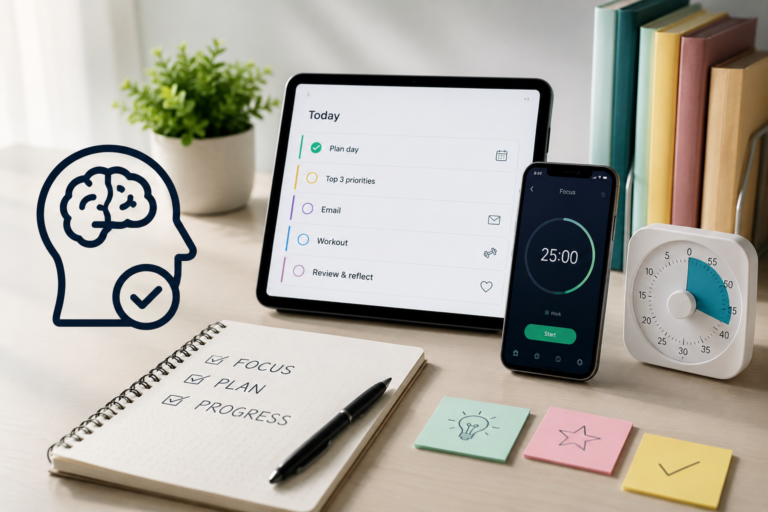
A solo timer can structure a work period, but a timer alone does not provide another person’s presence. If that is all you need, you do not have to add a social component.
What does the research show?
Possible explanations include having a clear starting time, feeling accompanied, seeing someone else working and making a small commitment to another person. These are plausible explanations for individual experiences, not established proof of a specific ADHD brain mechanism.
In a 2023 study by Eagle, Baltaxe-Admony and Ringland, researchers analysed survey responses from 220 adults about how they understood and used body doubling. Participants described different settings, tasks and reasons for using it, including companionship and accountability.
That survey documents experiences. It does not establish that body doubling caused better performance or that a particular app is effective.
Experimental work is also emerging. A 2025 research preprint about body doubling in virtual reality reported faster task completion in a small experiment involving 12 participants performing a bricklaying task with human or AI company. That specific result cannot be assumed to apply to studying, household tasks, long-term ADHD outcomes or commercial coworking services.
The practical conclusion is to treat body doubling as an optional organisational strategy you can evaluate for yourself. A helpful session is useful information about your preferences; it is not evidence of a diagnosis or a substitute for appropriate care.
Compare body-doubling apps and informal options
This is a comparison of documented formats and practical considerations, not a hands-on product test or clinical ranking. Provider details were checked on 23 October 2026. Check current terms, availability and local checkout prices before paying.
| Option | Format and access | Potential fit | What to check |
|---|---|---|---|
| Someone you know | An agreed in-person or online work period. No specialist service is required. | You prefer a familiar person and flexible arrangements. | Availability, conversation boundaries and whether both people want the arrangement. |
| Focusmate | Scheduled one-to-one video sessions with a matched partner. Limited free access and paid unlimited access. | You want a booked start time and a reciprocal check-in. | Camera requirements, session length, cancellation rules and current pricing. |
| Flow Club | Hosted group coworking sessions. The provider offers a trial and paid membership. | You prefer a hosted group rather than a one-to-one match. | Session schedule, interaction style, accessibility and membership terms. |
| Discord study or coworking community | A community-run space that may offer text, voice or video work rooms. | You already use Discord and can find a suitable community. | Admission rules, moderation, costs, age restrictions and room-specific expectations. |
| Study-with-me video | Recorded or streamed company without an individual commitment to you. | You prefer not to appear on camera or arrange a session. | Whether the video supports work or becomes another distraction. |
Focusmate: scheduled one-to-one video sessions
Focusmate’s official guide describes booking a session, joining a video call, sharing goals and checking in at the end. Sessions are available in 25-, 50- and 75-minute lengths. Its rules ask participants to remain visible on camera.
The official pricing page lists three free sessions per week without a credit card. Paid access is listed at US$12 per month when billed monthly, or US$8 per month billed annually, before any applicable taxes. Confirm the amount and billing commitment at checkout.
Consider it if: You want a scheduled partner and are comfortable with the video requirements.
Consider another format if: Being on camera makes the work harder or your environment does not allow it.
Flow Club: hosted group coworking
Flow Club offers hosted virtual coworking sessions. Its session guidance describes flexibility around turning video off and notes that chat-only sessions are available.
Check the session description for the expected interaction, timing and format. “Chat-only” means no spoken interaction; it should not be assumed to mean every other participation requirement is removed.
Membership follows a trial. Consult the provider’s pricing information and current checkout before subscribing. Trial access is different from an ongoing free plan.
Consider it if: You want a host and group structure, or need to explore a format with more flexible video participation.
Consider another format if: The available sessions do not fit your time zone, budget or preferred level of interaction.
Discord communities: evaluate the individual server
Discord is a communication platform, not one standardised body-doubling programme. A server may provide quiet coworking rooms, organised study sessions or mainly social chat.
Before joining a work room, read its rules and check:
- Whether there are active moderators and a clear reporting route.
- Whether voice, video, screen sharing or attendance is required.
- Whether the room is scheduled, drop-in or restricted to members.
- Whether access is free or connected to a paid community.
- Who can contact you and what your profile reveals.
Use Discord’s safety resources to review relevant settings. This guide does not endorse a particular server or verify the safety of community-run rooms.
Plan your first body-doubling session
Start with one task and an arrangement you can comfortably leave or change. The example below uses 25 minutes as a convenient trial length, not a clinically recommended duration.
Before the session
- Choose a specific task. Replace “catch up on everything” with something like “open the form and list the documents I need.”
- Prepare the materials. Have the file, supplies or instructions ready.
- Agree on the format. Decide how long to work, whether to speak and how to signal a break.
- Set a boundary. Clarify that neither person needs to monitor the other’s screen or assess their output.
- Protect private information. Keep confidential papers, account details and other people out of camera view.
If the task still feels too broad, use a written checklist or explore our task breakdown tool before the session.
Example: a 25-minute paperwork session
| Time | Action |
|---|---|
| Minutes 0–2 | Each person names a task and a manageable first action. |
| Minutes 2–22 | Work independently. Note unrelated thoughts instead of turning them into a conversation. |
| Minutes 22–25 | Save the work, name what happened and record the next action. |
Use the service’s structure if it differs from this example. With a friend, adjust the timing together.
A simple opening script
“I’m going to open the reimbursement form, enter the receipts I already have and note anything missing. I’d like to work quietly, then check in at the end.”
A useful closing check-in
Describe the result without treating unfinished work as a failure. For example: “I entered three receipts and found that one is missing. My next step is to request a replacement.”
The session can help you discover an obstacle as well as complete work. Your partner does not need to solve that obstacle.
Keep privacy and participation expectations clear
A coworking partner is not automatically bound by professional confidentiality. Share only what is necessary to describe your task. “Personal paperwork” is enough; you do not need to explain medical, financial or family details.
- Check the camera background before joining.
- Do not share your screen unless it is necessary and appropriate.
- Ask before recording, and follow the platform’s rules.
- Follow employer or university policies when handling confidential material.
- Use reporting or blocking controls if another participant behaves inappropriately.
For in-person sessions, both people should agree to the arrangement. A body double is not responsible for enforcing productivity, providing emergency support or supervising unsafe activities.
Troubleshoot common problems
| What happens? | What to try next |
|---|---|
| The session becomes a conversation. | Agree on a brief opening and closing check-in, with quiet work between them. |
| You attend but cannot begin. | Check whether the first step is clear and whether you have the materials or knowledge needed. |
| You feel watched or pressured. | Try a trusted person, another format or working alone. Do not continue an arrangement that increases distress. |
| The task is too difficult to understand. | Seek instructions, tutoring or specialist help. Another person’s presence cannot supply missing knowledge. |
| You repeatedly miss the appointment. | Check time-zone settings, reminders and preparation time. Consider a shorter or less scheduled format. |
| Your partner does not attend. | Follow the service’s rematching procedure or use a pre-agreed backup plan, such as a short solo work period. |
| You stay busy but avoid the intended task. | Name one visible action before beginning and return to it during the closing check-in. |
| You finish early or need to stop. | Follow the platform’s participation rules. With an informal partner, agree in advance how either person can end or change the session. |
Decide whether body doubling is worth continuing
After a few attempts, record what happened rather than relying only on whether the session felt productive:
- Did you attempt the action you intended?
- Did the arrangement make starting easier, harder or unchanged?
- How much effort did booking, preparing and attending require?
- Did you feel comfortable with the social and privacy expectations?
- Would a simpler reminder, checklist or solo work block meet the same need?
Comparisons between sessions are imperfect because tasks, energy and circumstances change. Use the record to make a personal decision, not to calculate a clinical effect.
You can keep the format for selected tasks, change it or stop. You do not need a paid subscription to make the strategy legitimate, and you do not have to use it for every work session.
When another kind of support may be more useful
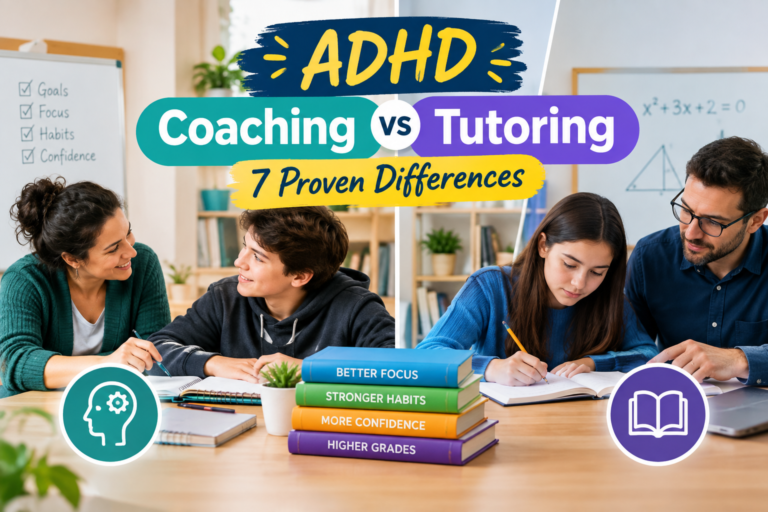
If you need help understanding course material, consider tutoring or instructor support. If you need help organising a wider workload, academic coaching may be worth exploring. Our coaching and tutoring comparison explains those roles.
If concentration or task difficulties are persistent, worsening or significantly affecting daily life, discuss them with a qualified healthcare professional. Coworking services do not diagnose ADHD, manage medication or replace clinical care.
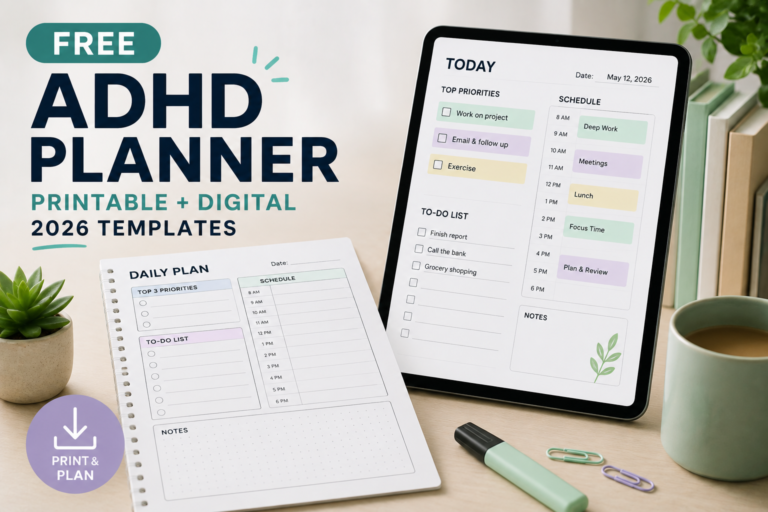
For planning the work around a session, see our daily planning guide. For background on planning and initiation difficulties, read our executive dysfunction guide.
Your next step: Choose one manageable task, one comfortable format and a clear stopping point. Afterwards, decide whether the arrangement helped enough to repeat.
[…] use our simple planner templates. For an explanation of supportive company while working, see our body-doubling guide; adapt any arrangement to the child’s age and […]